Time saving is life saving

Contact sales
Menu

Safety solution

Access Control & Intrusion Detection

The right people, in the right places.

One access control system for safe and hazardous areas, tied into tracking and mustering through LocateAware. Access events update persons on board automatically, with no manual reconciliation between access and safety systems.

Time saving is life saving

Functions

Access control functions

Eight core functions, managed from one interface and tied into tracking and mustering.

Secure authentication

Straightforward, reliable authentication with centrally managed access decisions.

  • Card, mobile credential, PIN and biometrics
  • Authentication mode set per reader
  • The controller grants or denies access against central rules

Onboarding and offboarding

One enrolment process for the whole employment lifecycle.

  • Personal data, photo, PIN and biometrics in one workflow
  • Several credentials per cardholder
  • Special-purpose credentials, including threat alert cards

Anti-passback

Stops credentials being misused in controlled areas.

  • No re-entry without a valid exit or time condition
  • Prevents credential sharing
  • Configurable time-based rules

Threat management

Change door behaviour across the site in response to safety or security events.

  • Activated centrally from the operator workstation
  • Preset modes such as lockdown or permanently open
  • High-threat (fire, security) and low-threat modes

Time-based access

Access follows schedules, shifts and time windows automatically.

  • Schedules per person, group or door
  • Working hours, shift patterns and temporary access
  • Enforced without operator intervention

Zone and area-based access

Manage access by zone rather than door by door.

  • Doors grouped into zones or areas
  • Permissions assigned per zone
  • Consistent rules across related areas

Event logging and audit trails

Every access event, alarm and system action is recorded.

  • Searchable audit trails for investigations
  • Supports regulatory and internal compliance
  • Data available for reporting and export

Offline operation

Access control keeps working through network or server outages.

  • Controllers keep making decisions locally
  • Resynchronises automatically when the connection returns
  • Designed for high-availability sites

Also included: visitor management, with host pre-registration, self-registration, document upload and e-signing; and automatic POB updates, so access events feed straight into mustering.

Authentication

Credentials

Set the authentication mode reader by reader. Biometric readers work alongside card, PIN and mobile credentials, on their own or as part of multi-factor authentication.

Card

Contactless cards, fobs or tags: 125 kHz HID Proximity or 13.56 MHz MIFARE (see below).

PIN

A PIN on its own, or as a second factor alongside a card.

Coming Soon

Mobile credential

Credentials on a phone, which can be issued to visitors before they arrive.

Coming Soon

Facial recognition

Visible-light imaging with liveness detection against photos, video and masks.

Coming Soon

Fingerprint

Liveness detection and multiple templates per person, processed on the device.

Card technologies

Legacy

125 kHz HID Proximity

  • Simple, reliable and widely installed
  • Fixed, read-only card number
  • No encryption or mutual authentication
  • Easier to clone

For sites that need to keep existing cards and readers.

Modern secure option

Works with Generation 3

13.56 MHz MIFARE

  • Contactless smart card with cryptographic authentication
  • Encrypted communication between card and reader
  • Stores extra data and supports more than one application
  • MIFARE DESFire EV2 / EV3: AES encryption and mutual authentication

Recommended for new installations, with DESFire cards.

The next generation of access controller

Generation 3 Access Controller

A scalable, modern alternative to traditional door-level access control, for large onshore and safe-area installations. Generation 3 consolidates control into a single high-performance unit, reducing door-side hardware and running on standard network infrastructure.
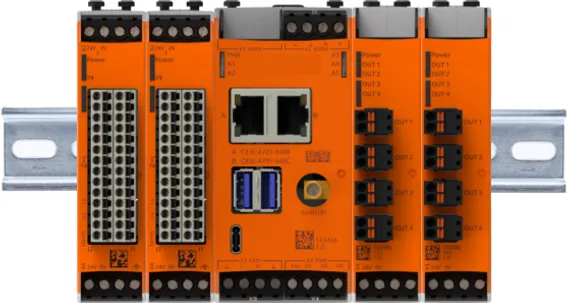
  • Highly scalable8 or 16 doors per controller
    1,000+ doors
    100,000+ cardholders
    90-S-3330A (8 doors)
    90-S-3330B (16 doors)
  • High security13.56 MHz MIFARE tags, OSDP communications protocol and AES-256 encryption between controller and server
  • High reliabilityDual Ethernet connectivity
Generation 3 access controller, 8-door version: a row of orange DIN rail modules with network, USB and I/O connections.
Generation 3 controller (8 doors)
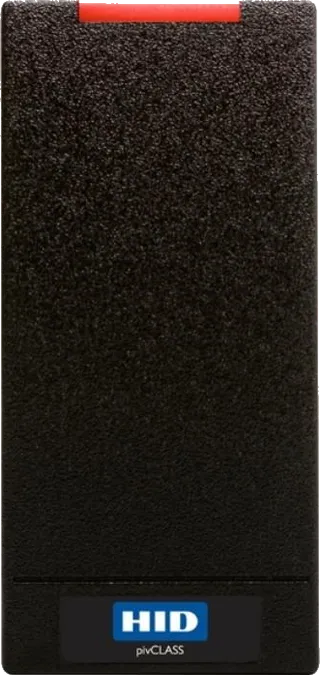
Wall-mounted card reader: a slim black panel with a red status light at the top.
Reader
  • Lower cost per door at scaleOne controller supports many access points, cutting hardware and installation cost in high-door-count systems.
  • Scalable, flexible architectureGrows efficiently as doors are added, without a matching increase in control hardware.
  • Enhanced reader security with OSDPNative OSDP support gives encrypted, two-way communication with readers and better device monitoring.
  • Powerful controller platformA modern chipset gives more processing capability, flexibility and headroom for future features.
  • Offline operationThe controller keeps working on its own during server or network outages, buffers 1,000,000+ events, and synchronises them with the server when it reconnects.

Local, centralised, hybrid or Ex Zone 1

Flexible deployment options

Every site is different, so you choose how access control is built: controllers at the doors, a Generation 3 controller in an equipment room, a mix of both, or fully certified Ex Zone 1 doors for hazardous areas. Whichever you choose, it runs as one system, with the same software, integration and security, and you can add doors and controllers of either type as your site changes.

Local deployment

Each local controller sits at the door and runs two doors, wired directly to their readers, locks, break-glass units and exit buttons. It is a proven, cost-effective way to cover doors that are few or far apart, and each controller keeps making access decisions on its own if the network is lost.

Best for

  • Smaller sites
  • Doors spread out across a site
  • Established installations
Local deploymentThe access control server connects over the IP network to local controllers. Each local controller runs two doors and has its own 110/230 VAC supply. It is wired to each door’s reader (Wiegand), lock (relay output), break-glass unit and push-to-exit button (inputs).ACCESS CONTROLSERVERIP NETWORKLOCALCONTROLLER2 DOORS110/230 VACDOOR 1READERWIEGANDLOCKRELAY OUTPUTBREAK GLASSINPUTPUSH TO EXITINPUTDOOR 2READERWIEGANDLOCKRELAY OUTPUTBREAK GLASSINPUTPUSH TO EXITINPUTLOCALCONTROLLER2 DOORS110/230 VACDOOR N-1READERWIEGANDLOCKRELAY OUTPUTBREAK GLASSINPUTPUSH TO EXITINPUTDOOR NREADERWIEGANDLOCKRELAY OUTPUTBREAK GLASSINPUTPUSH TO EXITINPUT⋮⋮Local deploymentACCESSCONTROLSERVERIP NETWORK110/230 VACLOCAL CONTROLLER2 DOORSWIRED TO BOTH DOORSDOOR 1READERWIEGANDLOCKRELAY OUTPUTBREAK GLASSINPUTPUSH TO EXITINPUTDOOR 2ONE CONTROLLERFOR EVERY TWO DOORS

Local: each controller runs two doors and keeps making access decisions if the network is lost

Centralised deployment

One Generation 3 controller in an equipment room runs 8 or 16 doors, cabled out to each door. Fewer controllers means less hardware, a lower cost per door and simpler maintenance, while dual Ethernet and OSDP readers add resilience and security.

Best for

  • High door counts
  • Onshore and safe-area buildings
  • Keeping control hardware in one secure room
Centralised deploymentIn the equipment room, the access control server connects over the IP network, by two Ethernet links, to one Generation 3 controller, which runs 8 or 16 doors and has its own 110/230 VAC supply. It is cabled to each door’s reader (OSDP), lock (relay output), break-glass unit and push-to-exit button (inputs).EQUIPMENT ROOMACCESSCONTROLSERVERETH 1ETH 2IP NETWORKGENERATION 3CONTROLLERCENTRALISED8 OR 16 DOORS90-S-3330A / B110/230 VACCABLEDTO DOORSDOOR 1READEROSDPLOCKRELAY OUTPUTBREAK GLASSINPUTPUSH TO EXITINPUTDOOR 2READEROSDPLOCKRELAY OUTPUTBREAK GLASSINPUTPUSH TO EXITINPUTDOOR 3READEROSDPLOCKRELAY OUTPUTBREAK GLASSINPUTPUSH TO EXITINPUTDOOR NREADEROSDPLOCKRELAY OUTPUTBREAK GLASSINPUTPUSH TO EXITINPUT⋮⋮Centralised deploymentEQUIPMENTROOMACCESSCONTROLSERVERIP NETWORKETH 1ETH 2110/230 VACGENERATION 3 CONTROLLERCENTRALISED · 8 OR 16 DOORS90-S-3330A / BCABLED TO EACH DOORDOOR 1READEROSDPLOCKRELAY OUTPUTBREAK GLASSINPUTPUSH TO EXITINPUTDOOR 2DOOR N⋮ONE CONTROLLER FOR 8 OR 16 DOORS

Centralised: one Generation 3 controller runs 8 or 16 doors

Hybrid deployment

Mix local and centralised controllers in the same system, choosing area by area: Generation 3 controllers where doors are close together, local controllers where they are spread out or remote, and Ex Zone 1 doors in hazardous areas. Everything is managed from one place, with the same software and cardholders, so every project, site or scenario gets the architecture that suits it.

Best for

  • Large or mixed sites
  • Projects with different needs in different areas
  • Sites that grow or change over time

Ex Zone 1 deployment

For doors in Ex Zone 1 hazardous areas, the whole door is certified, not just the controller: the controller, reader, break glass, push-to-exit button and maglock are all ATEX and IECEx certified for Zone 1. Each Ex controller runs two doors, keeps making access decisions if the network is lost, and is managed in the same system as every other door.

  • Ex Intelligent Access ControllerA dual-door controller in a 316L stainless steel flameproof (Ex d) enclosure, with an increased-safety (Ex e) chamber for safe access to the cable terminations. It also monitors two additional door sensors.
  • Zone 1 Ex readerA card reader in a robust 316 stainless steel enclosure, for hazardous-area doors.
  • Ex door devicesZone 1 certified break glass, push-to-exit button and maglock complete the door.

Best for

  • FPSOs, FLNGs and offshore platforms
  • Onshore process areas
  • Any door in an Ex Zone 1 hazardous area
Ex Zone 1 deploymentThe access control server, in the safe area, connects over the IP network to an Ex access controller inside the Ex Zone 1 hazardous area. The controller runs two doors and has its own 110/230 VAC supply. Everything inside the hazardous area is Zone 1 certified: the controller, and each door’s reader (Wiegand), maglock (relay output), break-glass unit and exit button (inputs).SAFE AREAEX ZONE 1 · HAZARDOUS AREAACCESS CONTROLSERVERIP NETWORKEX ACCESSCONTROLLER2 DOORSEx110/230 VACDOOR 1ExREADERWIEGANDExMAGLOCKRELAY OUTPUTExBREAK GLASSINPUTExEXIT BUTTONINPUTDOOR 2ExREADERWIEGANDExMAGLOCKRELAY OUTPUTExBREAK GLASSINPUTExEXIT BUTTONINPUTEx Zone 1 deploymentSAFEAREAACCESSCONTROLSERVERIP NETWORKEX ZONE 1HAZARDOUS AREAEX CONTROLLER2 DOORSEx110/230VACWIRED TO BOTH DOORSDOOR 1ExREADERWIEGANDExMAGLOCKRELAY OUTPUTExBREAK GLASSINPUTExEXIT BUTTONINPUTDOOR 2ExExExExTHE WHOLE DOOR ISZONE 1 CERTIFIED

Ex Zone 1: the controller and every device at the door are Zone 1 certified

Security

Intrusion detection

Intrusion detection extends access control with integrated intrusion monitoring and alarm handling: an extra layer of site security in the same platform. Motion detectors, door contacts and alarm inputs are monitored and handled centrally, alongside access control, tracking and mustering.

Key capabilities

  • Motion detectors, door contacts and alarm inputs
  • Alarms managed in the same operator interface as access control
  • Configurable alarm zones, armed and disarmed by zone
  • Real-time intrusion detection and notification
  • Coordinated responses with access control, such as locking doors and raising alerts

Integrated security

Intrusion events are linked with access control activity, video systems and personnel data. Operators get better situational awareness, and a faster, better-informed response to security incidents.

Operational benefits

  • One platform for all security management
  • Simpler than a stand-alone intrusion system
  • Faster response through integrated alarms and workflows
  • Scales from a single site to many sites

PIR motion detectors

  • Passive infrared detection of human movement from thermal changes
  • Wide coverage, with configurable zones for rooms, corridors and perimeters
  • Signal processing that filters out environmental noise, for fewer false alarms
  • Fast response, with immediate alarms and event reporting
  • Supervised inputs report alarm, tamper and fault conditions
  • Adjustable sensitivity and timing for each site
  • Built for continuous, 24/7 monitoring

Talk to us

Talk to an engineer, not a call centre.

Tell us about your site and your schedule. We'll come back with how the system would fit and what it would take.